


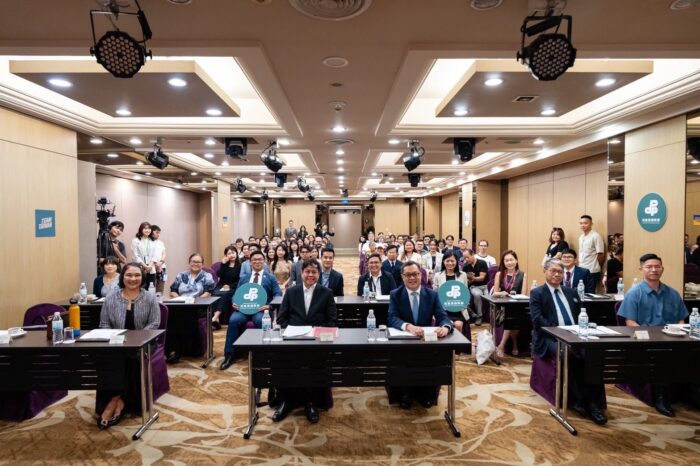
Taiwan’s ruling party, the Democratic Progressive Party (DPP), hosted a seminar on August 9, 2025, that explored the shared challenges faced by Taiwan and the Philippines in safeguarding their democratic systems from authoritarian interference.
The seminar was attended by youth and women delegates from the Council of Asian Liberals and Democrats (CALD), who were in Taiwan for parallel workshops. Taiwanese policymakers, academics, researchers, and civil society representatives also participated—reflecting growing interest in the need to strengthen cooperation and democratic resilience across the Indo-Pacific region.
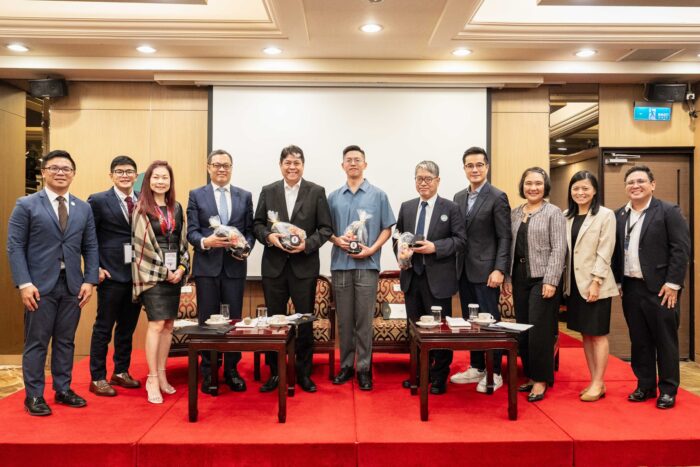
Moderated by Dr. Lai I-Chung, President of the Prospect Foundation, the seminar featured a distinguished panel of speakers from both Taiwan and the Philippines: Chihhao Yu, Co-Director of the Taiwan Information Environment Research Center (IORG); Francis “Kiko” Pangilinan, Philippine Senator and former CALD Chairperson; and Chen Ming-chi, Taiwan’s Deputy Minister of Foreign Affairs.
Mr. Yu opened the discussion by introducing the work of IORG, which seeks to combat information manipulation, curb authoritarian influence, improve public discourse, and strengthen democratic resilience in Taiwan. He analyzed how the People’s Republic of China employs multifaceted coercive tactics to undermine Taiwan’s democratic institutions and limit its international space. In particular, he highlighted China’s use of information infiltration to portray democracies as chaotic and ineffective. Despite these efforts, he emphasized that the technological capabilities of Taiwan’s civic community remain a key asset in resisting external interference.
“Foreign influence and interference is—and will continue to be—a critical issue that we must address within both our political and information systems,” said Senator Pangilinan, referring to the shared challenges faced by the Philippines and Taiwan. Speaking on the impact of foreign disinformation campaigns, he remarked, “Democracy cannot be built—or defended—on lies. Facts are the foundation of democracy. Without them, the entire system collapses. So how do we defend democracy when truth is under constant attack?”
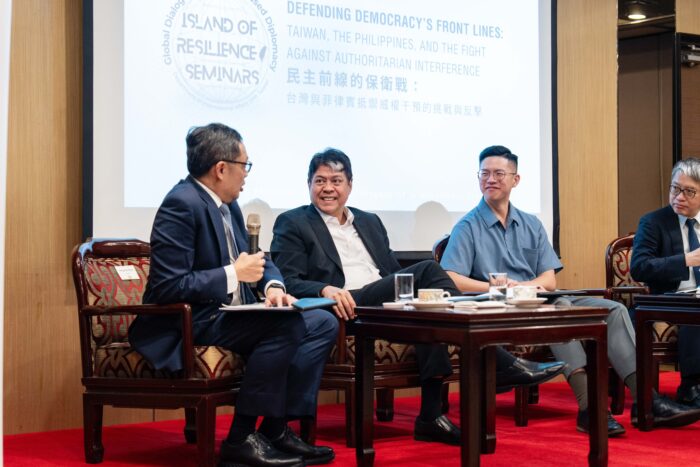
Drawing from his recent electoral victory, Senator Pangilinan proposed that one strategy to counter disinformation is to build genuine relationships with people—including those who may be spreading false narratives. “Let’s not become the monsters we seek to slay,” he said. “Instead, let’s build new spaces—forums like this one, and beyond—where truth can breathe, where people can connect, where empathy is stronger than anger.”
Deputy Minister Chen focused his remarks on “integrated” or “total diplomacy,” a values-based approach grounded in democracy, peace, and prosperity. This framework aims to promote mutual benefit and co-prosperity with diplomatic allies and like-minded nations. He emphasized that Taiwan seeks to demonstrate its role as a stabilizing force in the Indo-Pacific and as a global model of freedom and democracy.
“Taiwan and the Philippines are indeed islands of resilience in the Indo-Pacific region,” said Michael Chen, Acting Director of the DPP’s International Affairs Department. He noted that while both countries face growing, multifaceted threats from China, their increasingly close and deepening relationship represents a vital frontline in the defense of democracy in the region.
Categorised in: News Article
This post was written by CALD
 Unit 409, 4/F La Fuerza Plaza 2, 2241 Don Chino Roces Ave. corner Sabio St., 1231 Makati City, Philippines
 +632 8819 60 71
 info@cald.org