



Institutions are necessary, but are they sufficient to foster democratic resilience?
This appears to be the central debate in the recently concluded policy roundtable organized by the Council of Asian Liberals and Democrats (CALD) in Makati City, the Philippines on 27 March 2026. Held on the sidelines of the network’s 52nd Executive Committee Meeting, the roundtable assembled political party leaders, policy analysts, academics, media practitioners, members of civil society and other stakeholders to come up with policy recommendations on how to enhance democratic resilience at the national and regional levels.
“Fix the roof when the sun is shining”, was one of the key messages in the opening statement of Leena Rikkila Tamang, director for Asia and the Pacific of the International Institute for Electoral Assistance (IDEA). More specifically, she emphasized the importance of looking at legal and institutional frameworks to identify vulnerabilities, strengthen resilience and prevent future backsliding. She also noted that prevention is better than cure, and that it would be difficult to increase resilience once democratic backsliding has begun. Tamang added that in Asia, there were challenges relating to “resilience conundrum” where “institutions meant to safeguard democracy are themselves implicated in backsliding”, not to mention the fact that backsliding tactics are becoming “sophisticated, adaptive and difficult to detect.”One of the institutions that matter in strengthening democratic resilience is political parties. Drawing from the experience of Indonesia, Hasto Kristiyanto, secretary general of the Indonesian Democratic Party of Struggle (PDI-P), concluded that party institutionalization — which encompasses systems, reification, decision-making autonomy, party functions, strategic leadership and ideology — is crucial for the survival and competitiveness of PDI-P amidst Jokowi’s authoritarian populism. Kristiyanto concluded: “modern election-winning strategies… can only be effective and sustainable in the long run if implemented within the party’s institutional framework.”
The effectiveness of political parties, however, can also be constrained by the political environment where it operates. Isra Sunthornvut, deputy leader of the Democrat Party (DP) of Thailand, described his political party’s situation as being “caught in the middle” of competing narratives about politics – those who want to preserve the status quo and those who want change. The polarization between these two camps, coupled with the nationalist sentiment brought about by the Thai-Cambodia conflict, presented challenges to the Democrats in the last elections. Amidst these challenges, Sunthornvut noted the readiness of the DP to step in when needed – “to give the government a helping hand, … or to give pointers on how the country should be run from a more professional standpoint.”
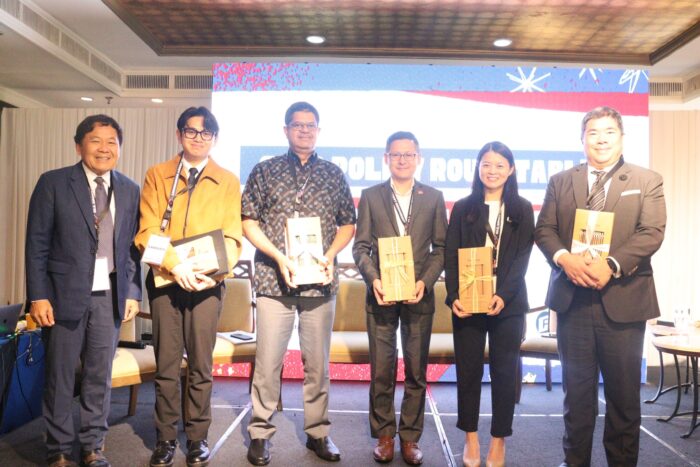
Like Thailand, Malaysia’s institutions and processes are also affected by its political context. Lee Boon Shian, youth chief of Parti Gerakan Rakyat Malaysia, described his country’s diversity as both a strength and a challenge. He noted ongoing efforts in the country to manage diversity through political negotiation and dialogue – emphasizing that “in plural societies, democracy requires not only majority rule, but also mutual respect and inclusive governance.” Drawing from Malaysia’s experience, he pointed out three pillars of democratic resilience: 1) strong and credible public institutions; 2) responsible political leadership and political parties; and 3) active and engaged citizenry.
Active participation of the citizens is also one of the pillars of Taiwan’s democratic resilience. “Taiwan’s resilience does not come from the top, but from an informed and engaged citizenry”, said Alysa Chiu, deputy director of the Democratic Progressive Party (DPP). She added: “In Taiwan, democracy is our greatest security asset, because transparency builds trust, and trust will forge unity and confidence.” Apart from adherence to democratic values, Chiu also noted that part of Taiwan’s strategy is to build “whole-of-society resilience” so that their society can function and recover quickly from any crisis. She also emphasized how Taiwan is also strategically using technology, particularly its semi-conductor industry, to defend democracy globally.
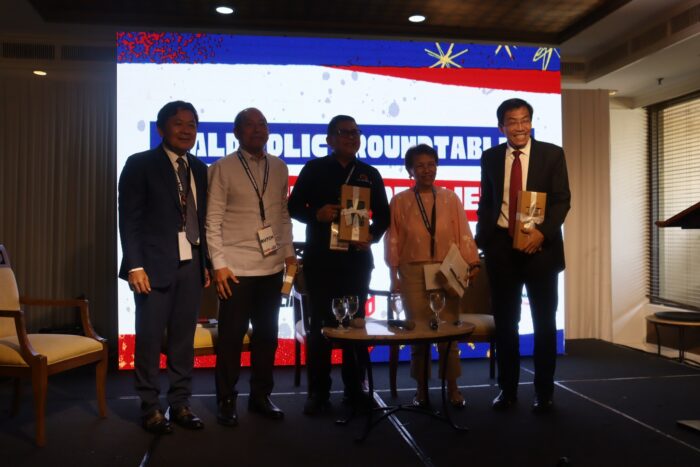
The importance of active citizenry in building resilience was also emphasized in the intervention of Florencio “Butch” Abad, former budget secretary of the Philippines and a Liberal Party (LP) stalwart. While recognizing that institutional guardrails are essential, he argued: “They will not work – unless they are anchored in civic power.” For him, the challenge is how to connect civic energy with institutional reform. This can be done by investing in: 1) civic education that builds democratic values; 2) civil society that empowers communities; and 3) political systems that reward integrity over patronage. He concluded by saying: “…without civic virtue, institutions will remain fragile. But with it, even imperfect institutions can endure – and improve.”
Related to the idea of investing on people in building democratic resilience, Chee Soon Juan, secretary general of the Singapore Democratic Party and a neuropsychologist by training, pointed out that “resilience is a skill that we can acquire, cultivate and strengthen.” Resilience, for him, is underpinned by meaning, hope and agency, noting that the human brain has resilience circuits that becomes stronger every time a person overcomes a setback or crisis. He appealed to democracy activists, whether in political parties or in civil society, to consider resilience training for themselves and the general public.
This sentiment of placing great importance on people was echoed in the keynote address of Philippine senator and LP chairperson emeritus, Francis “Kiko” Pangilinan. He said that “…democratic resilience is not just a list of institutional fixes… it is also a cultural and relational project.” He continued: “It is about rebuilding trust and meaningful connection between leaders and the led. It is about renewing the social contract so that people feel democracy in their daily lives as protection, as dignity, as voice.” Pangilinan urged the roundtable participants to put the public at the center of the discussions – “not as abstract beneficiaries but as the primary authors and guardians of democracy.”
The richness of these discussions and debates during the roundtable placed CALD in unique position to shape the narrative about democratic resilience in the region. As CALD embarks to do this, Cambodian senator and then CALD chairperson Mardi Seng also reminded the roundtable participants: “When we talk about democratic resilience, we should remember that many countries in this (East and Southeast Asian) sub-region are still not democratic.”
Similarly, Almut Besold, head of office of Friedrich Naumann Foundation Philippines, said that “resilience does not just happen out of nowhere”, emphasizing the work that must be done to truly ingrain it in society. Relatedly, LP President Lorenzo “Erin” Tanada cautioned that “democratic resilience must be understood, not as a one time achievement, but as a continuous process.”
An important point was also raised by James Gomez, regional director of Asia Centre, who pointed out that for CALD to promote democratic resilience, CALD must itself be resilient by considering: 1) expanding beyond the sub-region; 2) inviting select civil society organizations in the network; and 3) looking for additional sources of funding.
The task at hand is enormous, but Jose Ramos-Horta, president of Timor-Leste, in a special message, called on CALD members to continue to adhere liberal and democratic values amidst the challenges – human rights, freedom, tolerance and pluralism.
Jeremiah Tomas of LP Philippines and Michelle Wu of DPP Taiwan served as masters of ceremonies of the policy roundtable, while Samady Ou of Cambodia National Rescue Party (CNRP) and Marites Vitug of Rappler Philippines were moderators of the two roundtable panels.
Categorised in: News Article
This post was written by CALD
 Unit 409, 4/F La Fuerza Plaza 2, 2241 Don Chino Roces Ave. corner Sabio St., 1231 Makati City, Philippines
 +632 8819 60 71
 info@cald.org