



Taiwan served as the perfect host for a regional, cross-sectoral workshop that examined democratic resilience to foreign authoritarian influence.
With around 60 participants from 15 countries in the Indo-Pacific, the convening spearheaded by the International Republican Institute (IRI) on 14-15 July 2026 brought together civil society leaders, investigative journalists, legislators, and political party leaders to: 1) map the foreign authoritarian influence landscape; 2) build cross-sector networks; 3) develop concrete policy solutions; 4) strengthen civil society capacity; and 5) identify windows of opportunity for policy reform.
The Council of Asian Liberals and Democrats (CALD), together with Inter-Parliamentary Alliance on China (IPAC), collaborated with IRI for the regional workshop, which looked at investigative reporting, civil society advocacy and legislative action as a single pipeline in addressing foreign authoritarian influence. CALD was represented by its members from Cambodia, Malaysia, Philippines, Singapore and Thailand.
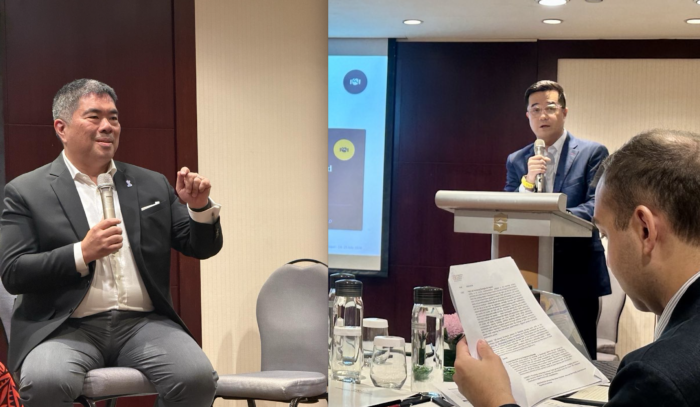
The two-day workshop was divided into two parts: 1) plenary sessions and small group discussion; and 2) working groups. The plenary sessions tackled the evolving landscape – economic, political and informational — of foreign authoritarian influence across Asia, best practices from media and civil society in countering authoritarian influence, and the experiences of legislators, legal experts and policy architects in countering foreign authoritarian influence through legal, regulatory and broader policy action. After the plenary sessions, there was a small group discussion on concrete practices and obstacles in facilitating cooperation among various democratic actors – journalists, civil society and policymakers – to better address foreign authoritarian influence as a connected ecosystem.
In the second part, the participants were divided into five groups: 1) information resilience and media freedom; 2) financial transparency and anti-corruption; 3) economic security and strategic dependencies; 4) electoral and political integrity; and 5) subnational capture and citizen oversight. The groups were asked to validate if the previous workshop recommendations from last year remain to be relevant, to add more recommendations if needed, particularly the so-called “easy wins”, and to analyze and select priority recommendations which can be further develop in the policy lab.
In the policy lab, the groups were tasked to discuss how the priority recommendations would be translated into reality by identifying their target audience, timeline, resources, risks and relative importance. The participants were asked to tailor the strategies based on their own national contexts while remaining conscious of the possibilities for cross-border collaboration. Some of the priority recommendations include:
In his message to the participants, CALD Secretary General Francis Gerald Abaya said:
“Today, the challenges to democracy in Asia are immense, especially since the region has become a battleground for the fight between democracy and authoritarianism. The growing political and economic might of China has also emboldened the region’s authoritarian or semi-authoritarian leaders to claim that they have a superior model for development compared to us. Given this reality, CALD will continue to stand up against anti-democratic forces, support struggling democrats and amplify the voices of the marginalized. We invite all of you to join us in this continuing fight.”
Categorised in: News Article
This post was written by CALD
 Unit 409, 4/F La Fuerza Plaza 2, 2241 Don Chino Roces Ave. corner Sabio St., 1231 Makati City, Philippines
 +632 8819 60 71
 info@cald.org