


“The story of democracy has never been written by institutions alone. It has always been written by people – by citizens who refuse to give up, by movements that refuse to be silenced, by generations that choose courage over fear. Today, that responsibility is ours,” declared Florencio “Butch” Abad, newly elected CALD Chairperson, in his acceptance speech during the first ever CALD Elections on 27 March 2026.
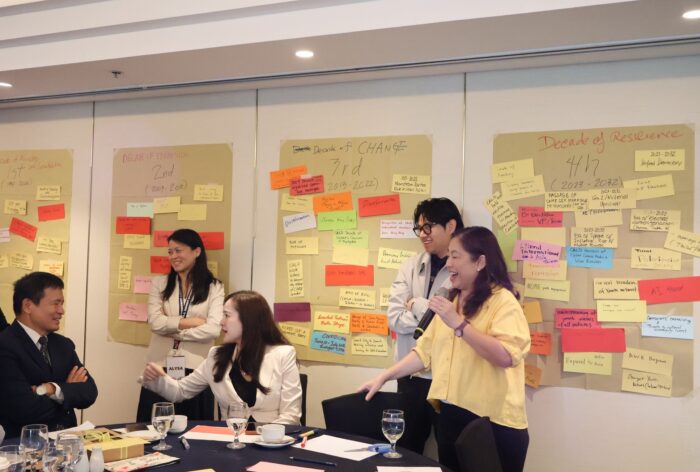
This call to action set the tone for a high-level gathering on 28 March, where newly elected CALD leaders, alongside representatives from member-parties and partner organizations, convened to reflect on the organization’s journey and chart its future. Facilitated by INCITEGov’s Mardi Mapa-Suplido, the meeting revisited key historical milestones while assessing current political trends, emerging challenges, and strategic opportunities. Delegates worked toward a forward-looking roadmap, outlining clear goals, priority initiatives, and measurable targets for the next two years.
The session opened with a keynote address by Fan Yun, Member of the Legislative Yuan from Taiwan’s Democratic Progressive Party, who examined the evolving landscape of democracy in Asia. Drawing from Taiwan’s history, she highlighted pivotal moments that shaped its democratic transition – from the brutal suppression of protests during the 1947 February 28 Massacre, to the political awakening sparked by the 1979 Formosa Incident, and the student-led Wild Lily Movement of 1990 that paved the way for democratic elections.
“Without public support, their sacrifice cannot sustain the movement,” Fan emphasized, underscoring the essential role of civic participation and collective resolve. Yet, she also highlighted ongoing challenges, especially from external forces. “The number one challenge is China. The number two is also China. The number three is also China,” she emphasized, underscoring the intense geopolitical pressures facing democracies in the region.
Despite these pressures, Fan highlighted Taiwan’s strategic responses, including strengthening its global relevance through semiconductor leadership, the so-called “silicon shield,” and reinforcing democratic governance through political competition, transparency, and accountability. She concluded with a powerful reminder: “Solidarity is our superpower. Alone we are vulnerable, but together we are invincible.”
Building on these insights, delegates engaged in a Horizon Mapping exercise, connecting CALD’s legacy with its long-term aspirations. They traced and identified the organization’s evolution across five distinct periods: the Decade of Founding and Consolidation (1993–2002), Expansion (2003–2012), Change (2013–2022), Resilience (2023–2032), and a forward-looking Decade of Hope (2033–2043). This exercise provided a shared framework for understanding both past achievements and future direction.
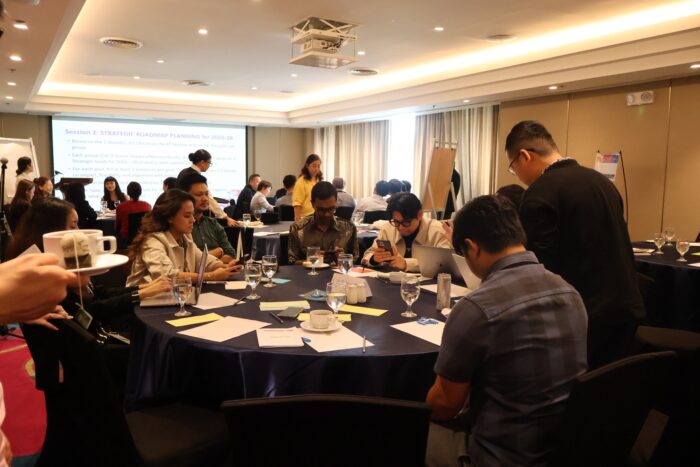
To translate vision into action, participants divided into three groups – CALD Youth, the Women’s Caucus, and Senior Leaders – to develop strategic goals, initiatives, and operational plans.
Representing the youth, Michelle Wu of Taiwan’s Democratic Progressive Party and newly elected CALD Youth Chairperson, outlined three priorities: strengthening youth wings to boost participation, enhancing the exchange of knowledge and skills in areas such as campaigning and digital innovation, and expanding youth engagement on the global stage. She emphasized that achieving these goals would require stronger coordination, dedicated secretariat support, and sustained funding.
From the Women’s Caucus, Jaslyn Go of the Singapore Democratic Party and re-elected chairperson of the Caucus, stressed the need to first build a solid internal foundation. Citing challenges such as inconsistent participation and the absence of a formal charter, she proposed establishing a core group with designated representatives from each member-party, supported by regular bi-monthly meetings and improved communication structures. Formalizing the group’s framework and ensuring continuity were identified as immediate priorities.
Meanwhile, senior leader Diem Do of Viet Tan presented three broader strategic directions for CALD: maintaining political relevance amidst rising populism and democratic backsliding, ensuring organizational sustainability through expanded partnerships and membership, and strengthening support for member-parties operating in diffcult political environments. He emphasized that these efforts rely on strengthening member engagement and cultivating a greater sense of ownership throughout the network.
Across all discussions, a common thread emerged: the importance of accountability, clear priorities, and measurable outcomes. Delegates agreed that while the vision for a “Decade of Resilience” is both timely and achieivable, its success depends on sustained collaboration, adequate resources, and a shared commitment to action.
In the end, the gathering reaffirmed a fundamental truth echoed in Abad’s opening words: democracy is not a permanent achievement, but a continuous journey – one that demands courage, cooperation, and collective responsibility from every generation.
Categorised in: News Article
This post was written by CALD
 Unit 409, 4/F La Fuerza Plaza 2, 2241 Don Chino Roces Ave. corner Sabio St., 1231 Makati City, Philippines
 +632 8819 60 71
 info@cald.org